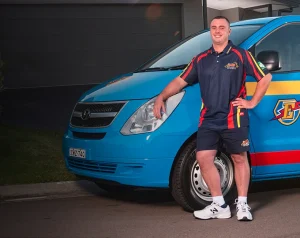
Electrodry dominates Australia’s specialised home and commercial cleaning sector with a massive network of mobile territories, making it a highly popular option for hands-on owner-operators due to its asset-light, low-overhead corporate framework.
Now, with a service roster expanded far beyond carpet care into air conditioning, upholstery, and mould remediation, Electrodry Australia is rolling out advanced digital booking updates and fleet fuel optimisation to combat rising import costs and competition from local and national service groups.
For franchisees in 2026, Electrodry offers strong brand recognition, a centralised booking system, and daily geographic flexibility, but also challenges such as adapting to local customer acquisition and maintaining equipment.
A typical day starts with reviewing pre-booked jobs, planning routes to minimise travel, and handling a mix of carpet cleaning and urgent calls.
Franchisees must maintain equipment, manage cleaning product inventory, and monitor costs. The work is physically demanding but offers autonomy and satisfaction, blending independence with brand support and delivering visible client impact.
Brand Pedigree & Market Status
Electrodry was founded in 1983 by Paul Burchell in Newcastle, New South Wales, after he left a corporate accounting career to build a specialised hospitality cleaning operation.
The network grew out of his early commercial venture, “Monster Magic,” and transitioned into Electrodry after Burchell collaborated with chemical researchers to engineer a proprietary, fast-drying carpet-cleaning system.
Its advantage comes from proprietary low-moisture dry-cleaning chemistry, allowing carpets to be walked on immediately—a key differentiator from traditional steam cleaning.
Electrodry’s model is entirely mobile. Franchise owners avoid high rents and long leases by operating from home, servicing broad regional and suburban areas from their commercial vehicles.
2026 Electrodry Australia: Growth Statistics & Performance
- Current Network Size: Over 140 franchised territories on the road nationwide, anchored by a centralised national customer service headquarters based in Wallsend, Newcastle.
- Velocity/Targets: Prioritises multi-service territorial expansion. The current operational target emphasises broadening store-level revenue by embedding secondary indoor air quality, tile restoration, and specialised leather-care products directly into the standard daily call pipeline.
- Operational Data: The network receives over 7,000 weekly inquiries. New franchisees usually generate $180,000–$250,000 annual gross revenue, with 18%–25% profit margins in the first two years. Established operators can exceed $400,000 revenue and $80,000–$120,000 in annual net profit, with payback periods of 18–30 months, reflecting strong cash flow and scalability.
Electrodry Executive & Industry Insights
“The structural resilience of the Electrodry model rests in its centralised administrative machinery. By managing the heavy operational burdens of digital marketing, localised call routing, and client booking schedules out of a unified national head office, the franchisor allows field technicians to focus completely on volume throughput and physical service execution.” — Retail Market Summary, QSR Industry Intelligence
“For home services networks, revenue security increasingly depends on product diversification. Moving into high-margin specialised domestic services like mould treatment and cooling-system decontamination allows mobile fleets to maximise their average invoice value per customer driveway stop, effectively insulating bottom-line margins from raw fuel and chemical inflation.” — NoBullEconomics, Restaurant Research Analysis Report (May 2026)
Electrodry Franchise Investment Snapshot Table
| Metric | Details |
Initial Investment | $50,000 to $120,000+ AUD (Highly dependent on territorial sizing, starting vehicle numbers, specialized tool layout purchases, and working capital) |
Upfront Franchise Fee | Detailed upon formal onboarding (Positioned as an accessible, entry-tier asset class relative to heavy-infrastructure food or retail options) |
Ongoing Fees | Variable Service/Marketing Structure (Typically managed via ongoing centralized administration, dispatch allocations, and national call-center management fee frameworks) |
Store Formats | Completely mobile service fleet (Utilizing custom-branded, high-spec commercial vans equipped with proprietary dry-cleaning and restorative tooling) |
Target Markets / Key Expansion Zones | High-growth regional residential estates, expanding outer-metropolitan lifestyle corridors, and key commercial distribution nodes across WA, SA, and regional NSW |
Training & Support | Comprehensive physical and administrative onboarding covering advanced chemical safety protocols, machine technical maintenance, customer management workflows, and local digital optimisation |
Franchise Comparison: ELECTRODRY vs. Jim’s Cleaning vs. Coochie Hydrogreen vs. Wash Rite
| Metric | Electrodry | Jim’s Cleaning | Coochie Hydrogreen | Wash Rite |
Initial Investment | $50K – $120K+ | $30K – $70K | $60K – $90K | $60K – $100K |
Royalty Fee | Variable | Fixed Flat Monthly | Variable | Variable |
Marketing Fee | Centralized Booking | Fixed Allocation | Included in Flat | Regional / National |
Total Ongoing Fees | Highly Competitive | Fixed Flat Fee | Tiered Structure | Variable |
Australian Footprint | 140+ units | 1,000+ units | 100+ units | Expanding Network |
Primary Advantage | Proprietary chemistry & central booking | Maximum brand awareness & flat-fee structure | Niche lawn-care focus & repeat client retention | Specialized exterior pressure-wash workflows |
Key Insights
For buyers, Electrodry provides a chemical-backed service model with lower upfront capital ($50k–$120k+) than fixed retail sites, supported by a national booking centre. Franchisees pay an 8% royalty on gross revenue, plus 2% for technology and marketing, providing clear ongoing costs for comparison with competitors.
When business operators analyse the domestic and commercial mobile services environment, they balance brand-specific product capabilities versus ongoing fee structures:
- For Massive Lifestyle Scale & Flat-Fee Protection: Jim’s Cleaning (1,000+ units) represents the largest home services division in Australia, using a massive flat-fee royalty system that lets high-performing operators keep more profits as they scale, though it lacks exclusivity to proprietary chemical products. In comparison, Electrodry franchisees pay a percentage-based royalty but benefit from exclusive access to proprietary cleaning solutions and stronger national booking and operational support, creating a more tightly integrated, brand-driven franchise network.
- Coochie Hydrogreen (~100 stores) is focused on lawn health and property treatments, with highly repeatable, subscription-style services.
- Wash Rite specialises in external building maintenance for commercial and residential clients, using high-volume pressure equipment for large contracts rather than indoor work.
The Monkish Verdict
For energetic, hands-on operators, Electrodry is a nimble, resilient business that turns immediate customer problems into quick, high-margin jobs.
The main operational barrier is the physical and client management demands. Profitability depends on route efficiency, fuel control, and optimising client schedules.
Scaling beyond one van requires shifting to workforce management and training.
The upside is substantial: a 40-year brand, centralised booking, and a growing catalogue of premium domestic services make Electrodry a solid, low-overhead mobile business engine.
Sources & Reference Material