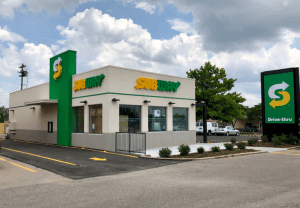
Subway dominates Australia’s QSR sector with a vast network of locations, serving as a go-to for first-time franchisees due to its low-capital model.
Now, amid a major overhaul following Roark Capital’s acquisition, Subway Australia is trimming underperforming stores and standardising menus to combat rising competition from premium sandwich and burger brands.
For potential franchisees in 2026, investing offers strong brand recognition but also entails challenges such as a saturated market and high ongoing fees.
Brand Pedigree & Market Position
Subway was founded in 1965 by 17-year-old Fred DeLuca and Dr. Peter Buck in Bridgeport, Connecticut, initially called “Pete’s Super Submarine Sandwiches.”
Its competitive advantage comes from its fresh-bread scent and assembly-line customisation, pioneering transparent, healthy fast food. By offering healthier, non-fried options, Subway gained market share.
In Australia, its main advantage is its ability to operate in small, low-cost spaces such as fuel station pods, university food courts, and strip malls, where heavy-duty cooking facilities are costly or impossible. (Source:
Dailyo)
2026 Subway Australia: Growth Statistics & Performance
- Current Network Size: 1,256 stores in Australia, maintaining Subway as the largest QSR footprint, ahead of McDonald’s and KFC.
- Velocity/Targets: Prioritises stabilisation over rapid growth, with a net consolidation of over 200 stores from 2023-2025 to remove low-margin outlets. The 2026 goal is a net-neutral store count, with 100% conversion to the ‘Fresh Forward’ layout by 2030.
- Operational Data: Average annual revenue per store is $400,000-$500,000 AUD. The rollout of premium menus has increased ticket sizes by 10-14%, helping offset inflation in raw ingredients.
Subway Executive & Industry Insights
“Subway’s new management team under Roark Capital’s ownership is working hard to restore the chain’s former glory… Subway’s primary challenge is to solve its value equation in a way that makes customers happy while also supporting franchisee margins.” — NoBullEconomics, Restaurant Research Analysis Report (May 2026)
“The system stands to benefit from the past culling of underperforming stores and more thoughtful development strategies going forward. The recent introduction of its updated menu strategy emphasises health and protein to go with digital strength.” — Retail Market Summary, QSR Industry Intelligence.
Subway Franchise Investment Snapshot Table
Metric | Details |
Initial Investment | $195,000 to $522,300 AUD (Total entry cost inclusive of fit-out, equipment, and starting capital) |
Upfront Franchise Fee | ~$15,000 AUD (Positioned as one of the lowest initial license payments among top-tier Australian QSRs) |
Ongoing Fees | 12.5% of gross weekly revenue (Comprising an 8% royalty fee and a 4.5% national advertising levy) |
Store Formats | High-street strip locations, CBD Express models, Shopping centre food courts, and Drive-thru co-locations with fuel networks |
Target Markets / Key Expansion Zones | Non-traditional footprints, regional travel centres, and select urban asset optimisation transfers |
Training & Support | Intensive 2-week training program covering multi-unit management, store operations, and localised digital marketing frameworks |
Franchise Comparison: SUBWAY vs. Zambrero vs Soul Origin vs Roll’d
| Metric | Subway | Zambrero | Soul Origin | Roll’d |
| Initial Investment | $195,000 – $522,300 | $350,000 – $650,000+ | $300,000 – $500,000 | $400,000 – $550,000 |
| Royalty Fee | 8% | 7% | 9% | 7% |
| Marketing Fee | 4.5% | 3% | 4% | 2% |
| Total Ongoing Fees | 12.5% | 10% | 13% | 9% |
| Australian Footprint | 1,200+ units | ~300 units | ~170 units | ~140 units |
| Primary Advantage | Unmatched brand recognition | Strong territory availability | Premium coffee revenue stream | Fast-casual trend & FMCG line |
Key Insights
For a prospective Australian franchise buyer, Subway offers the ultimate brand recognition and a lower upfront capital entry ($195k – $522k), but it comes at the cost of severe territory saturation and a high ongoing fee structure (12.5%) that squeezes net margins.
When buyers cross-shop Subway, they are looking for its “asset-light, low-complexity” assembly model (no heavy frying or complex ventilation). They generally pivot to one of three modern Australian alternatives depending on their primary investment goal:
For Growth & Territory Availability: Zambrero (~300 stores) mirrors Subway’s simple, behind-the-glass assembly line but offers better territory options, higher average transaction values, and lower ongoing fees (10%).
For Higher Revenue Efficiency: Soul Origin directly captures Subway’s healthy-lunch demographic while integrating a premium coffee program, securing a highly lucrative morning revenue stream that Subway has historically missed.
For Leaner Operating Margins: Roll’d taps into the booming fast-casual Vietnamese street food trend while offering the group’s lowest ongoing fee burden (9%), leaving more profit with the operator.
The Monkish Verdict
For the corporate investor or experienced owner-operator, Subway Australia offers a mature, well-calculated market opportunity.
The primary operational barrier is its ongoing fee structure: at 12.5% of gross sales, extracted weekly for royalties and marketing, it demands a heavy slice of top-line revenue—a burden felt more acutely at Subway, with lower average store volumes than capital-heavy giants like McDonald’s.
However, the upside lies in its exceptionally low cost of entry, minimal infrastructure complexity, and high-volume destination appeal. If you can secure a location with protected foot traffic or align with their expanding fuel-and-convenience footprint, Subway remains a highly standardised, low-operational-friction cash-flow engine.